
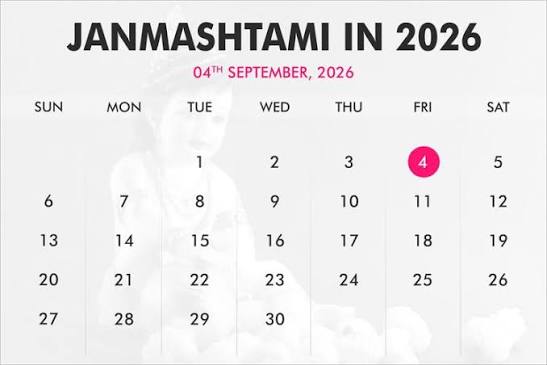
Janmashtami 2026 falls on Friday, September 4, 2026. It is one of the most loved Hindu festivals because it celebrates the birthday of Lord Krishna, who is believed to be the eighth avatar (form) of Lord Vishnu. On this day, people fast, sing songs, decorate temples, and stay up until midnight to celebrate the exact moment Krishna was born.
This guide explains everything about Janmashtami 2026 in simple words — the correct date, puja timings, fasting rules, the story behind the festival, and even what it means for your zodiac sign. Whether you are a student learning about Indian festivals or someone planning your puja, this article covers it all.
When is Janmashtami 2026? Date, Day & Overview
Janmashtami is celebrated on the 8th day (Ashtami) of the dark fortnight (Krishna Paksha) in the Hindu month of Bhadrapada. Because Hindu festivals follow the Moon calendar (not the regular calendar we use every day), the date changes every year.
- Date: Friday, September 4, 2026
- Also known as: Krishnashtami, Gokulashtami, Sri Jayanti
- Celebrated by: Hindus all over the world, especially in Mathura and Vrindavan (the places where Krishna grew up)
- Main rituals: Fasting, midnight puja, singing devotional songs, and breaking the fast after midnight
Think of it like this — just like we celebrate a friend’s birthday at a specific time each year, Hindus celebrate Krishna’s “birthday” based on where the Moon and stars were positioned when he was born, thousands of years ago.
Janmashtami 2026 Puja Muhurat Timings (City-Wise)
“Muhurat” simply means the most auspicious (best) time to do something. For Janmashtami, the most important time is called Nishita Kaal, which means “midnight time” — because Krishna was born exactly at midnight.
| City | Nishita Puja Time (Sept 4–5, 2026) | Duration |
|---|---|---|
| New Delhi | 11:57 PM – 12:43 AM | 45 minutes |
| Mumbai | 12:24 AM – 1:09 AM | 45 minutes |
| Mathura | 11:55 PM – 12:40 AM | 45 minutes |
| Bengaluru | 12:14 AM – 12:58 AM | 44 minutes |
| Kolkata | 11:19 PM – 12:04 AM | 45 minutes |
Note: Timings can shift slightly by a few minutes depending on your exact location, so it’s best to check a local Panchang (Hindu calendar) for your city.
Ashtami Tithi & Rohini Nakshatra Timings 2026
Two things need to line up for Janmashtami to be extra special: the Ashtami Tithi (the date) and the Rohini Nakshatra (a star position). Krishna was born when both were present at the same time.
| Event | Timing |
|---|---|
| Ashtami Tithi begins | September 4, 2026, early morning |
| Ashtami Tithi ends | September 5, 2026, morning |
| Rohini Nakshatra begins | September 4, 2026, late night |
| Rohini Nakshatra ends | September 4, 2026, night (before midnight in most cities) |
Nishita Puja Time & Parana (Fast-Breaking) Time 2026
- Nishita Puja (main midnight worship): Around 11:57 PM on September 4 to 12:43 AM on September 5, 2026
- Parana (time to break the fast): After 6:00 AM on September 5, 2026
Parana is an important word to remember — it means the moment when the fast officially ends and you can eat normal food again. Most people break their fast early the next morning, once the Ashtami date has fully passed.
Janmashtami 2026: Sept 4 or Sept 5? Smarta vs Vaishnava Dates Explained
You might notice that some people celebrate Janmashtami on September 4, while others celebrate it on September 5. This isn’t a mistake — it’s because of two different Hindu traditions:
- Smarta Sampradaya (most households): They celebrate on the day when Ashtami is present at midnight. For 2026, this is September 4.
- Vaishnava Sampradaya (ISKCON and temples following strict Vaishnav rules): They celebrate on the day when Ashtami overlaps with Rohini Nakshatra at sunrise, which can sometimes be a day later.
A simple way to remember: if your family follows regular home traditions, you’ll likely celebrate on September 4. If you follow ISKCON or a Vaishnav temple, check their announcement, as it may be September 4 or 5.
Janmashtami 2026 Fasting Rules (Vrat Vidhi)
Fasting (called “vrat”) is one of the main parts of Janmashtami. Here’s how it’s usually done:
- A day before (Saptami): Eat light, simple (sattvic) food. Avoid heavy or spicy meals.
- On Janmashtami day: Wake up early, take a bath, and begin the fast with a prayer (called Sankalp).
- During the day: Many people avoid grains completely. Some eat only fruits and milk-based sweets (this is called a “Phalahar” fast).
- Strict fasters: Some devotees keep a “Nirjala” fast, which means no food and no water at all until midnight.
- Breaking the fast: The fast is broken only after the midnight puja is completed, or the next morning during Parana.
- Health note: People who are unwell, elderly, pregnant, or very young are usually advised to keep a lighter fast (fruits and milk only) instead of a strict one.
Janmashtami 2026 Puja Vidhi: Step-by-Step Process
Here is a simple, step-by-step way the puja (worship ritual) is usually performed at home:
- Clean the house and set up a small decorated area, like a cradle (jhula), for baby Krishna.
- Take a bath and wear clean clothes before starting the puja.
- Sit facing East or North with puja items ready — water, flowers, fruits, and a diya (lamp).
- Take a “Sankalp” — a short prayer where you promise to observe the fast with devotion.
- Bathe a small idol of baby Krishna with water mixed with black sesame seeds (this step is called Abhishek).
- Place the idol in a decorated cradle, symbolizing Krishna’s birth.
- Chant the names of Krishna’s parents and family — Devaki, Vasudev, Nanda, Yashoda, and Balram.
- At midnight (Nishita Kaal), sing the birth song (“Krishna Janam”), ring bells, and blow a conch shell.
- Offer sweets like “panjiri” or “makhan-mishri” (butter and sugar) as Krishna’s favorite food.
- Distribute prasad (blessed food) to family members after the midnight puja.
Krishna Janmashtami Katha: The Legend of Lord Krishna’s Birth
Long ago, a cruel king named Kansa ruled the city of Mathura. He heard a prophecy that the eighth child of his sister Devaki would end his life. Fearing this, Kansa locked Devaki and her husband Vasudev in prison and killed each of their children as soon as they were born.
When the eighth child was finally born — at midnight, during a huge thunderstorm — something magical happened. The prison chains broke open, the guards fell asleep, and Vasudev was able to carry the baby safely across the Yamuna river to the home of Nanda and Yashoda in Gokul.
This baby was Lord Krishna. He grew up as a playful, mischievous, and much-loved child in Gokul before eventually returning to Mathura, where he defeated Kansa and restored peace and justice to the kingdom. This story is why Janmashtami is celebrated with so much joy — it marks the victory of good over evil.
Astrological Significance of Janmashtami 2026 (Jupiter & Saturn Transits)
In 2026, Janmashtami arrives during a special planetary period. Jupiter is exalted in Cancer, meaning it is in its strongest and most positive position, something that happens only once every 12 years. At the same time, Saturn is placed in Pisces.
Interestingly, Krishna’s own birth story is linked to Saturn — his father Vasudev carried him across the river while Saturn’s energy was said to be strongly present. This mix of a powerful Jupiter and a meaningful Saturn placement makes Janmashtami 2026 feel extra significant for prayers related to family, wisdom, and new beginnings.
Janmashtami 2026 Effect on Your Zodiac Sign (Moon Sign-Wise)
Since Jupiter’s position changes the energy of each zodiac sign differently, here’s a simple look at what Janmashtami 2026 may mean based on your Moon sign.
Aries (Mesha)
Jupiter’s placement brings family happiness and blessings related to home. A good day for prayers about your household.
Taurus (Vrishabha)
Since Krishna was born in Rohini Nakshatra, which is connected to Taurus, this Janmashtami feels extra personal and meaningful for you.
Gemini (Mithuna)
A good time for money-related prayers. Sharing food with others can bring good fortune your way.
Cancer (Karka)
Jupiter is exalted in your own sign, making this one of the most powerful Janmashtami periods for personal growth.
Leo (Simha)
A good time for quiet reflection, meditation, and spiritual practices, more than loud celebrations.
Virgo (Kanya)
Prayers for financial goals are well-supported. Helping others on this day may bring good returns.
Libra (Tula)
A good period for career-related wishes, since Krishna is seen as a wise leader and guide.
Scorpio (Vrishchika)
A meaningful time to read or learn about the Bhagavad Gita and Krishna’s teachings.
Sagittarius (Dhanu)
A good time for deep spiritual or meditative practices and inner transformation.
Capricorn (Makara)
Good energy for relationships and partnerships. Couples praying together may feel extra blessed.
Aquarius (Kumbha)
A good day to focus on health goals and helping your community.
Pisces (Meena)
A meaningful day for children — prayers for kids’ education and creativity are well-supported.
(Note: These are general guidelines based on Moon sign and planetary transits, meant for interest and reflection — not strict predictions.)
How Janmashtami Is Celebrated: Dahi Handi, Raas Leela & Temple Decorations
Janmashtami isn’t just about fasting and prayer — it’s also full of fun traditions:
- Dahi Handi: A pot of curd (yogurt) is hung high up, and groups of young people form human towers to break it — recreating young Krishna’s love for stealing butter.
- Raas Leela: Dance-dramas that retell stories from Krishna’s childhood and his life in Vrindavan.
- Temple decorations: Temples across India are beautifully decorated with flowers, lights, and swings (jhulas) for baby Krishna.
- Midnight celebrations: At the stroke of midnight, bells and conch shells are sounded together to mark Krishna’s birth.
Janmashtami 2026 in Mathura & Vrindavan: Best Places to Celebrate
If you ever get the chance to celebrate Janmashtami in person, Mathura and Vrindavan (in Uttar Pradesh) are the most special places, since this is where Krishna was born and grew up.
- Krishna Janmabhoomi Temple, Mathura: Built at the exact spot believed to be Krishna’s birthplace.
- Banke Bihari Temple, Vrindavan: Famous for its lively midnight celebrations and huge crowds.
- ISKCON Temple, Vrindavan: Known for grand decorations and a peaceful, devotional atmosphere.
- Dwarkadhish Temple, Mathura: A beautifully decorated temple that draws thousands of visitors during the festival.
Significance & Importance of Janmashtami
- Marks the victory of good over evil, as Krishna eventually defeated the cruel king Kansa.
- Celebrates the teachings of the Bhagavad Gita, which Krishna later shared with the world.
- Brings families together through fasting, puja, and shared meals.
- Strengthens community bonds through public events like Dahi Handi and temple gatherings.
- Reminds people of values like courage, wisdom, and devotion.
Janmashtami 2026 Wishes, Messages & Gift Ideas
If you’re sending wishes to friends or family this Janmashtami, here are some simple ideas:
- A short message like: “Wishing you a Janmashtami filled with peace, happiness, and Krishna’s blessings!”
- Sweets such as peda, kheer, or panjiri, which are traditionally offered to Krishna.
- Small idols or pictures of baby Krishna (Bal Gopal) make thoughtful gifts.
- Books on the Bhagavad Gita or Krishna’s stories, especially nice for students and children.
Frequently Asked Questions on Janmashtami 2026
What is the date of Janmashtami 2026?
Janmashtami 2026 will be celebrated on Friday, September 4, 2026, according to most Hindu traditions.
Is Janmashtami 2026 on 4th or 5th September?
Most households (Smarta tradition) celebrate on September 4. Some Vaishnava temples and ISKCON may celebrate on September 4 or 5, depending on local tithi timings.
What are the fasting (vrat) rules for Janmashtami?
Most people avoid grains and eat only fruits or milk-based food during the day, breaking the fast only after the midnight puja or the next morning during Parana.
What is the significance of Rohini Nakshatra on Janmashtami?
Krishna was born under Rohini Nakshatra, a star linked to growth, beauty, and abundance. When it aligns with Ashtami, as it does in 2026, the festival is considered even more auspicious
How is Janmashtami celebrated in Mathura and Vrindavan?
These cities host grand midnight celebrations, temple decorations, devotional singing, and huge crowds of devotees at temples like Krishna Janmabhoomi and Banke Bihari.
What is Dahi Handi and when is it celebrated?
Dahi Handi is a fun tradition where groups form human towers to break a hanging pot of curd, celebrating young Krishna’s playful love for butter and curd. It usually takes place the day after Janmashtami.